How One Couple Had Their Wedding at the Great Pyramids of Giza
May 4, 2026
Words by
Photos courtesy of
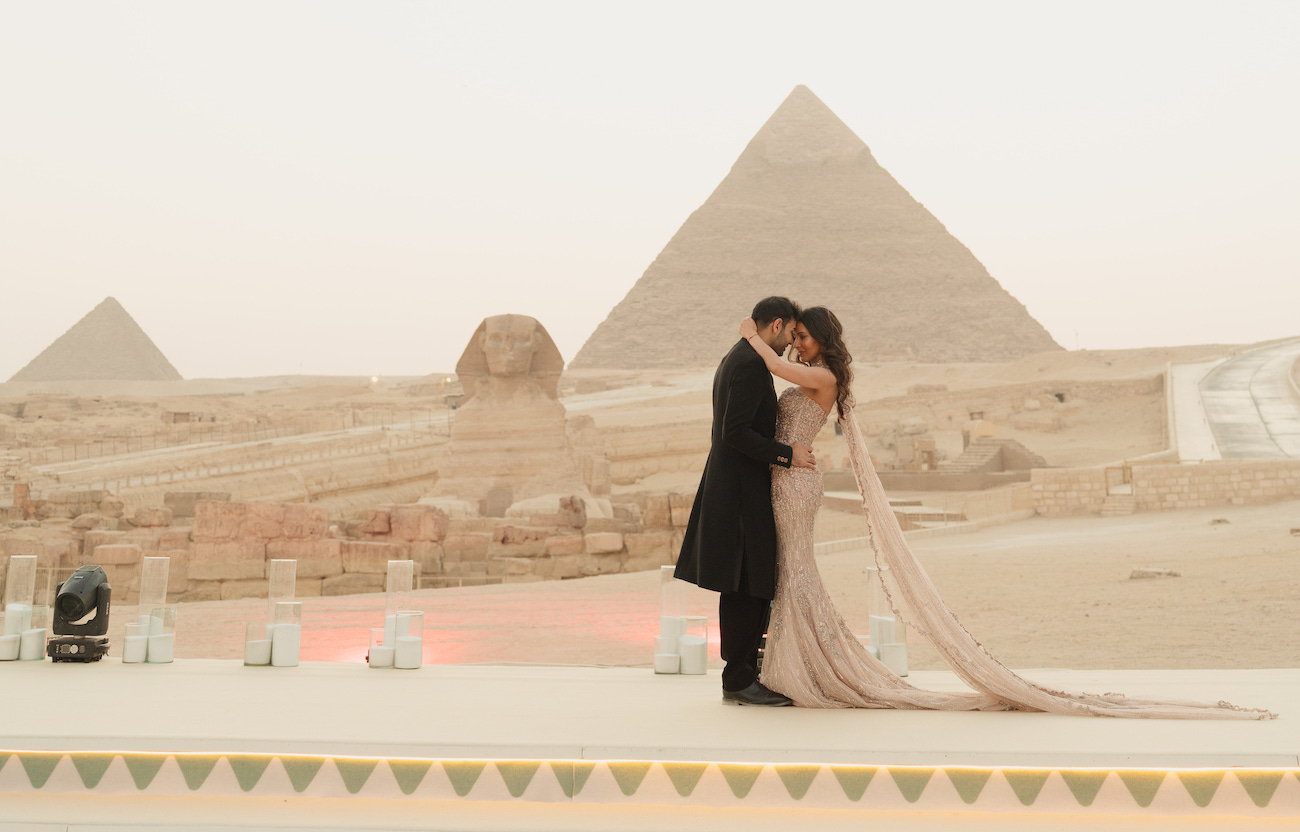
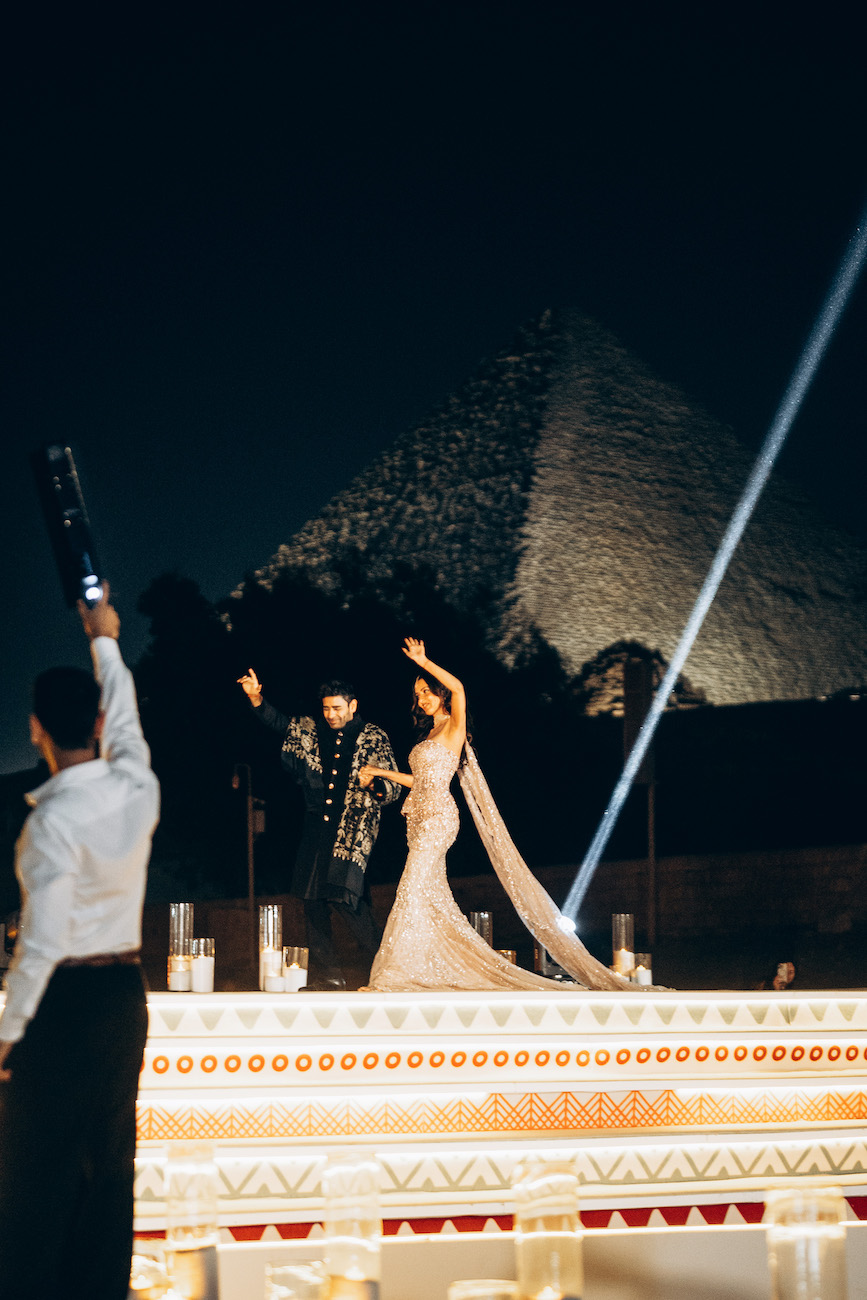
Take one glance at these photos, and you’ll probably be wondering, “How in the world did they pull off a destination wedding with the Great Pyramids of Giza as the backdrop?” You wouldn’t be the first to ask that question, and you certainly won’t be the last. That’s why when we were presented with the chance to interview the beautiful couple, Vivek Nandha, an investment banker, and Dr Monica Nayyar, a cosmetic dentist, about their Cairo celebration, we jumped at the chance.
Read on to learn first-hand from the groom about the planning, details, and execution of Monica and Vivek’s one-in-a-million destination wedding at the Great Pyramids of Giza!
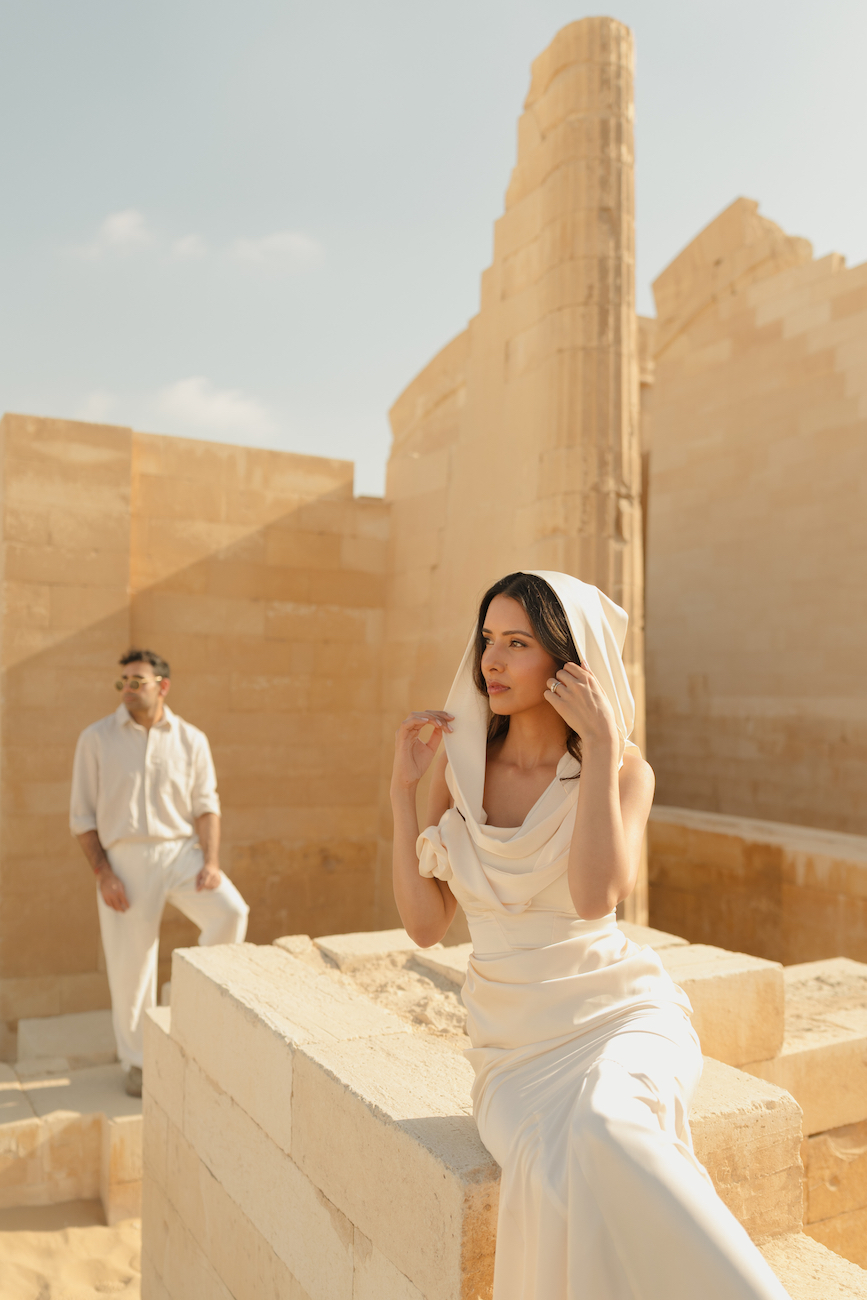
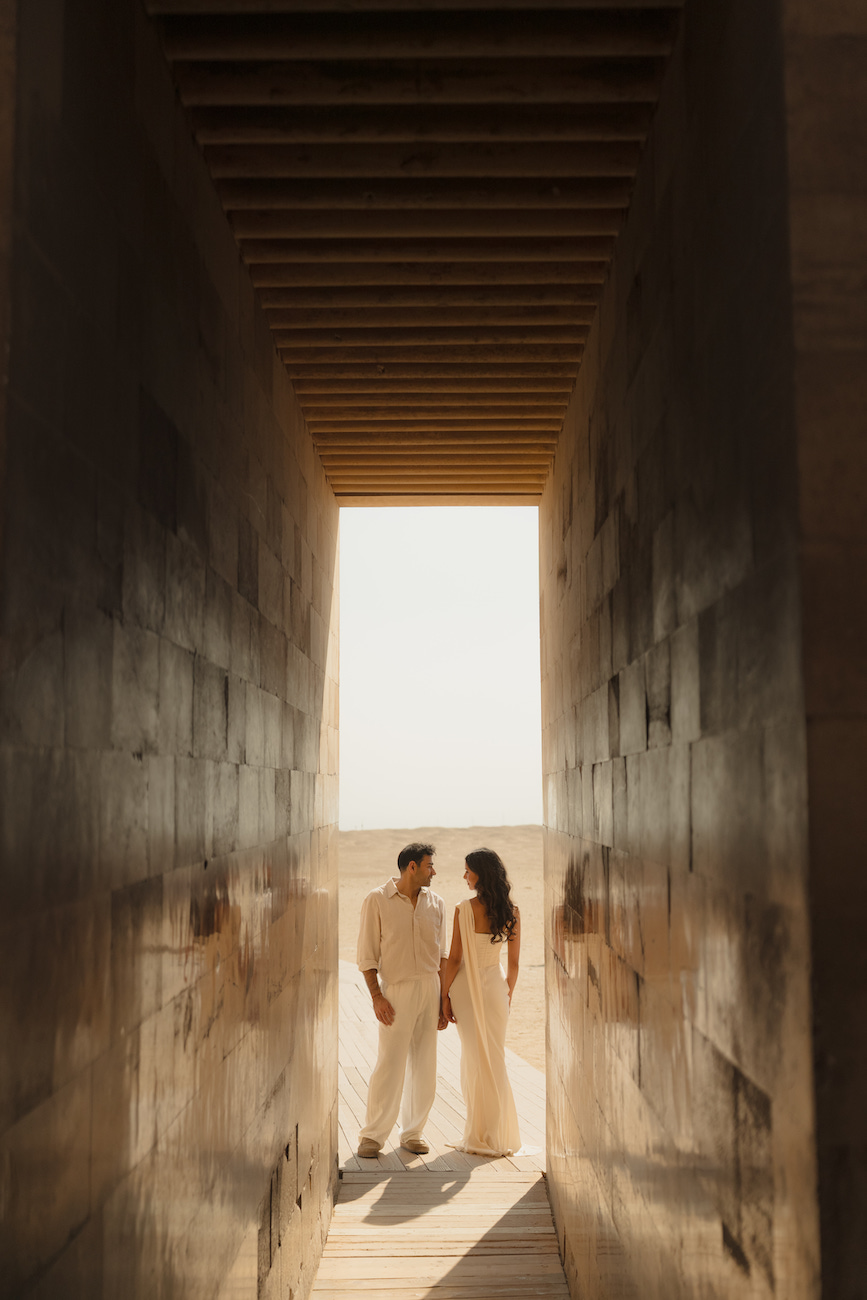
You obtained approval from the Egyptian Ministry of Tourism and Antiquities: what was that process actually like, and who was your first point of contact?
It began with relationships that were years in the making. Earlier in my career, I had worked in Egypt with the IMF, and that period gave me a deep understanding of how government institutions operate there. Through that work, I built genuine relationships with people across various levels of the Egyptian government. On top of that, several close friends from my time at the London School of Economics had partners who were Egyptian government officials, so I had a personal network in Cairo that went beyond the professional. Those connections gave us a foundation, but having an introduction and actually securing approval to host an event at the Pyramids are two very different things.
The process was closer to a diplomatic negotiation than a wedding-planning task. We had to present a formal proposal outlining every single element of what we intended to do on the plateau: the structures, the lighting, the catering infrastructure, the guest count, the timeline, and how we would protect the site. There were multiple rounds of review across different government departments. Each one had its own concerns: heritage preservation, security, tourism impact, and environmental protection. Nothing was rubber-stamped. Every detail was scrutinised, debated, and in many cases, revised.
What I will say is that the Egyptian authorities were deeply respectful and professional throughout. They take the stewardship of the Pyramids incredibly seriously, as they should. Once they understood that we shared that reverence, that we were not there to treat a World Heritage Site as a party backdrop but to honour it, the conversations became collaborative rather than adversarial. But it took months to get to that point.
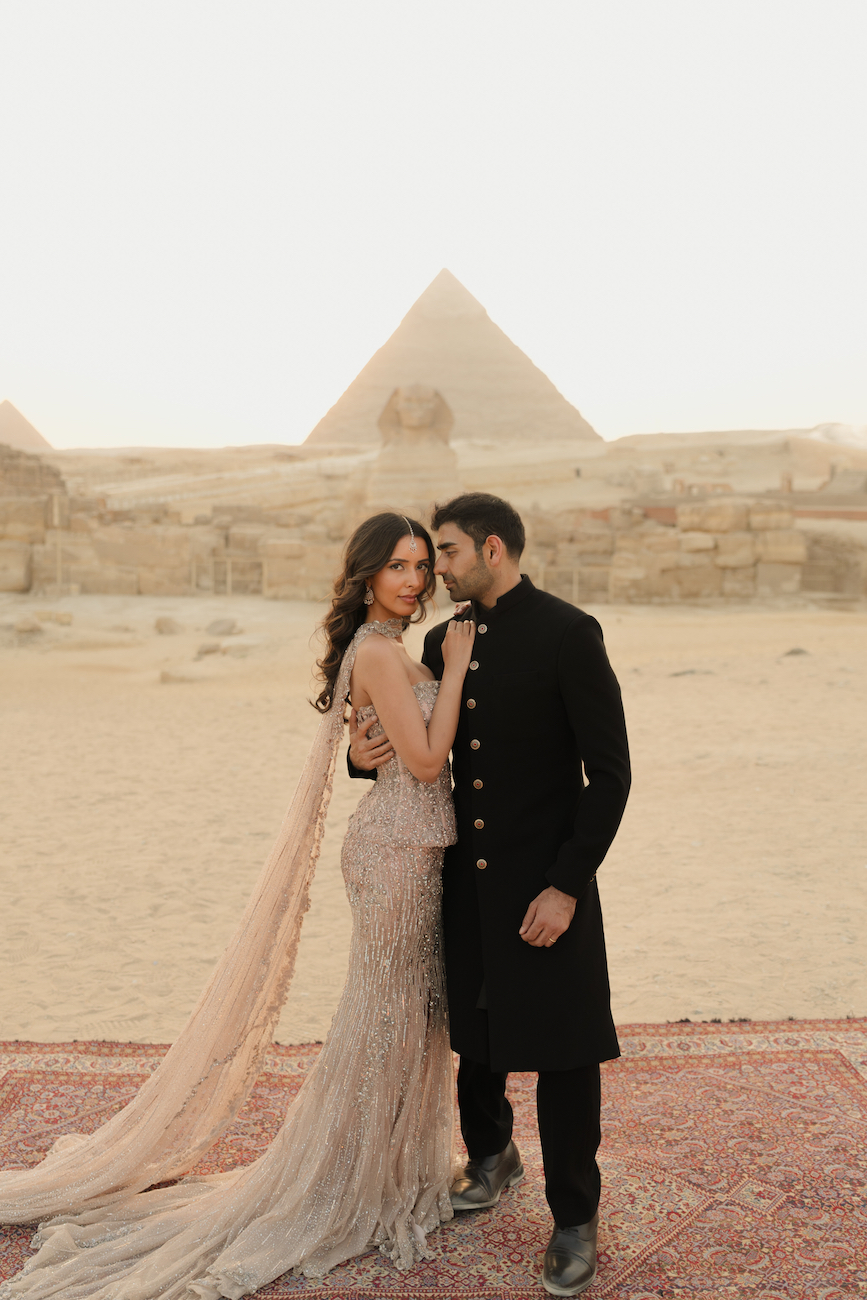
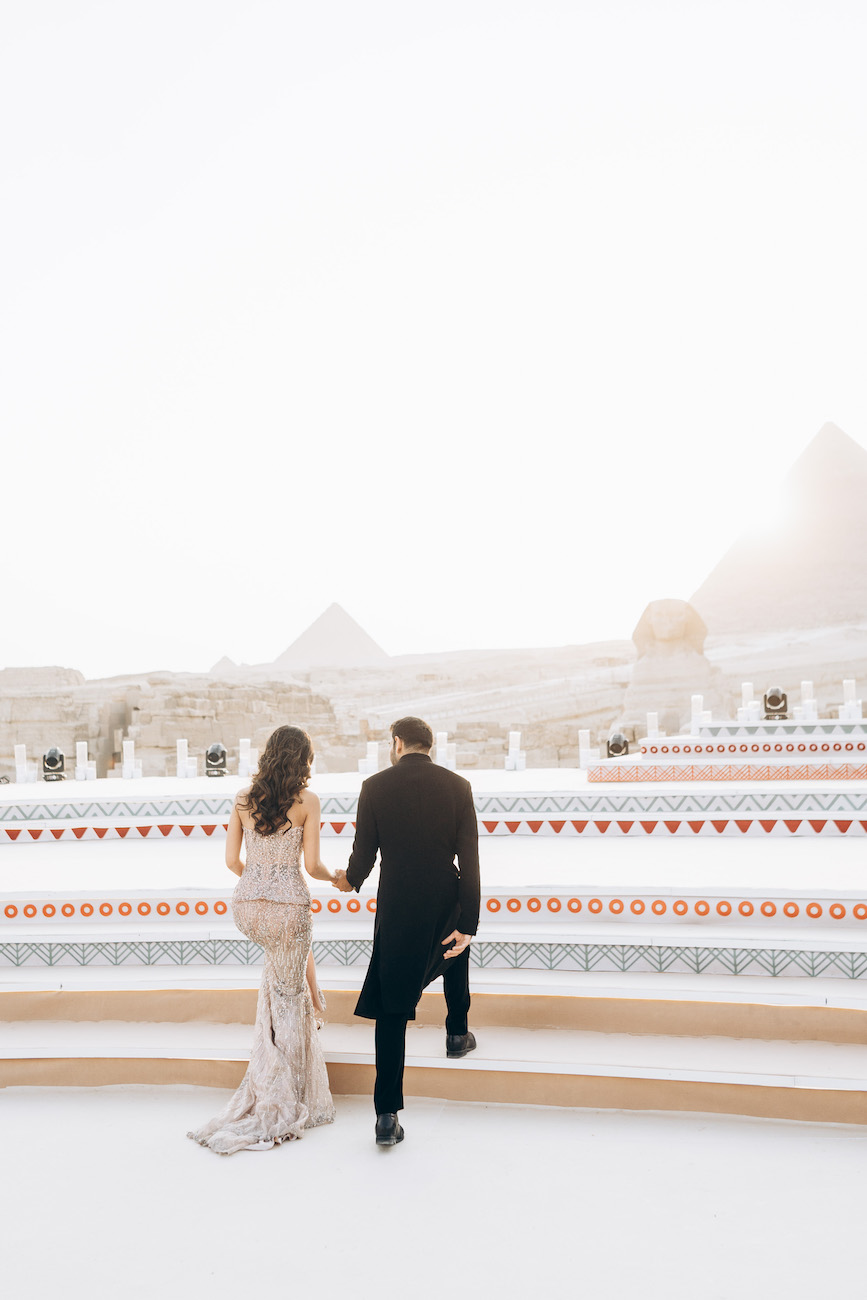
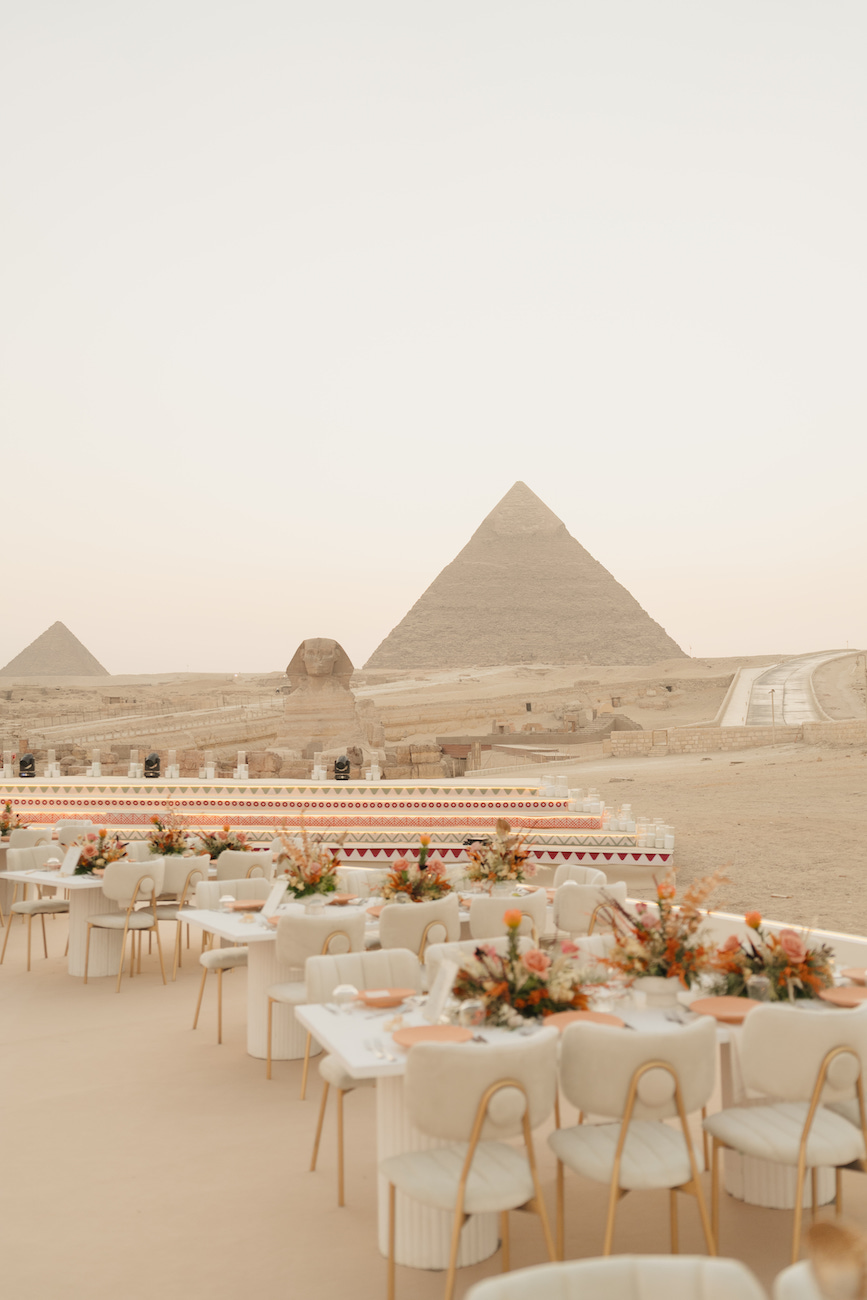
As the first British couple (and only the third couple ever) to have the Pyramids of Giza shut down for your wedding day, every element had to be created from scratch. What was the single biggest logistical hurdle you didn’t anticipate?
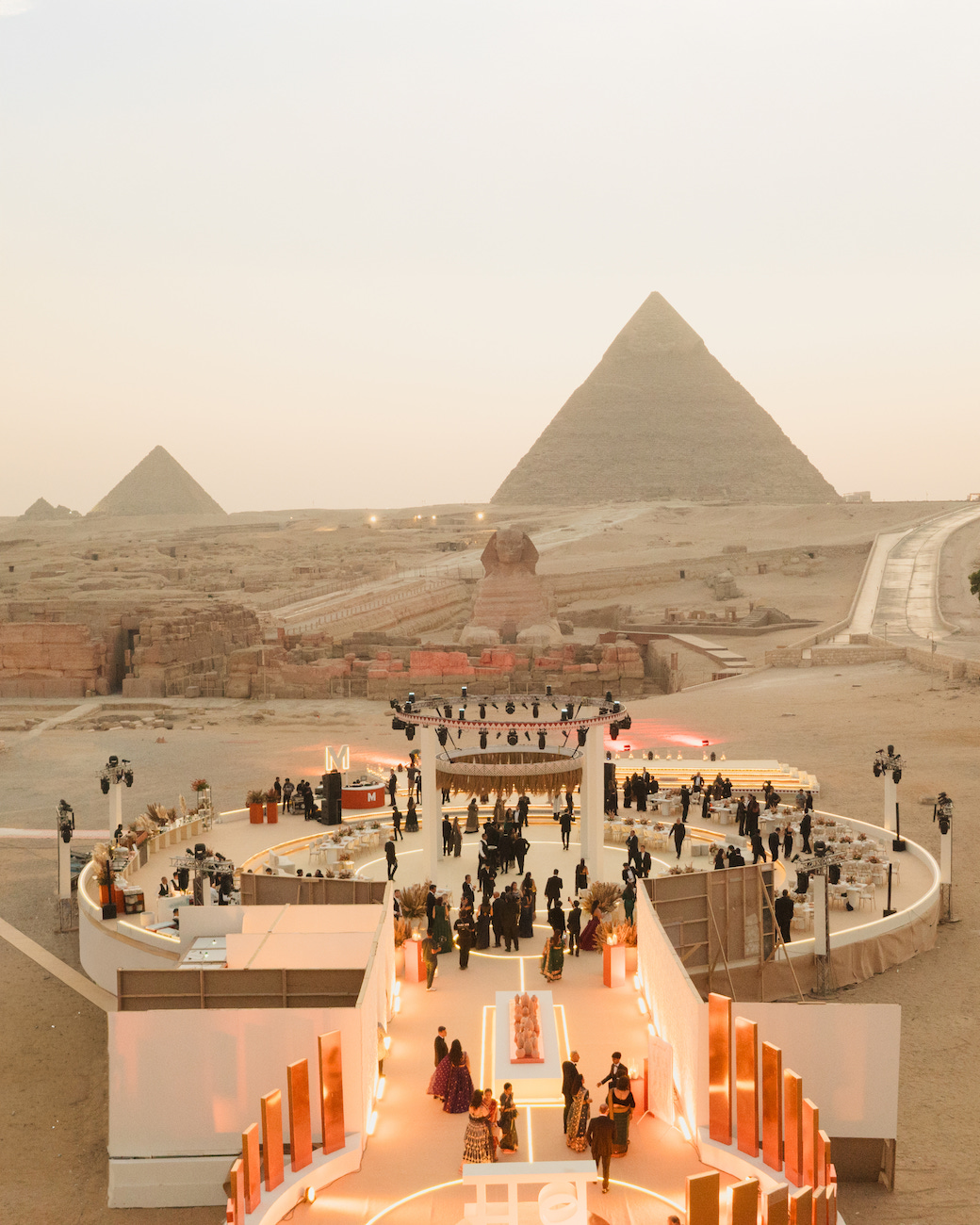
The construction timeline. We knew we would need to build an entire venue on the desert sand, stages, kitchens, lighting rigs, seating for 180 guests, but what I had not fully appreciated was that all construction had to happen between sunset and sunrise, after the site closed to tourists. That meant our teams worked through the night for ten consecutive nights. Then, after the event, they had four more days to dismantle everything and return the plateau to its original condition, quite literally down to the last grain of sand.
Coordinating that kind of overnight operation in the desert, with temperature swings, limited lighting, and extremely strict heritage protocols, was a challenge none of our vendors had ever faced before. There was no playbook. Every problem was a first. That is the part that kept me up at night, ironically, the same nights our construction crews were out there building.
How far in advance did you need to begin the government approval process, and what documentation did you need to prepare?
Our planning took a full eighteen months from the first conversation to the celebration itself. There is no blueprint for this; we were only the third couple in history to do it, so there was no established process to follow, no precedent to reference, no checklist to work through. Everything had to be figured out as we went.
The documentation was extensive. We submitted detailed architectural plans for every temporary structure, engineering assessments, a full insurance portfolio, security protocols, environmental impact considerations, a complete guest list, and a timeline that accounted for every hour we would be on the plateau. The Ministry needed to be confident that the site would not be altered, damaged, or disrespected in any way. Each element, and I mean each individual structural element, required its own sign-off. There was no blanket approval. It was item by item, nail by nail.
Beyond the formal paperwork, the process required several visits to Cairo and numerous face-to-face meetings with various departments and officials over the course of those eighteen months. Each trip moved the needle a little further, built a little more trust, and resolved a few more questions. The process demanded physical presence, patience, and a genuine willingness to adapt your vision to the government’s requirements rather than the other way around.
Strict government restrictions meant no cake and not even a bridal veil. How did you adapt your vision to work within those rules, and what other restrictions surprised you?
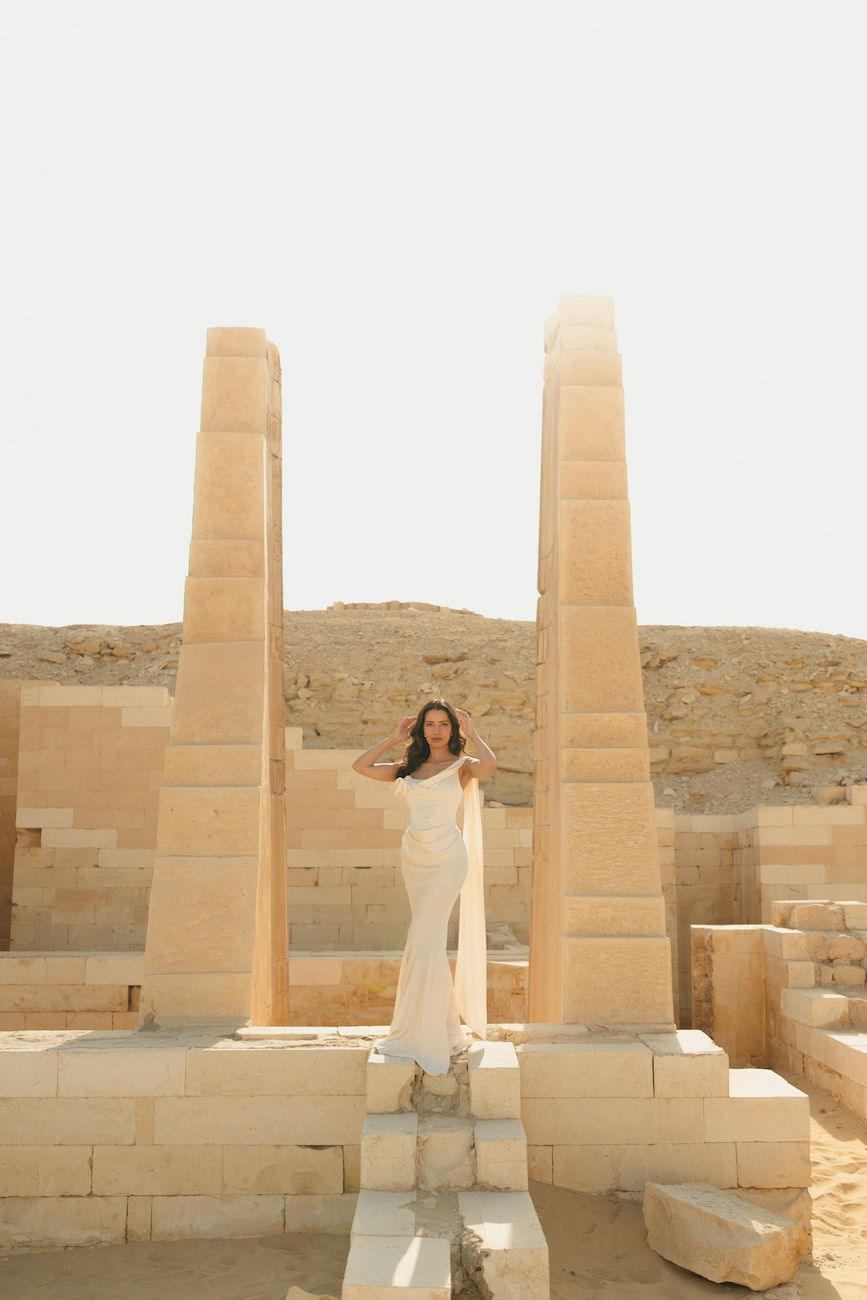
The restrictions were non-negotiable, and rightly so. No open flames and no candles on the plateau. No traditional wedding cake, because of the crumb and debris concerns on a heritage site. And, Monica could not wear a bridal veil.
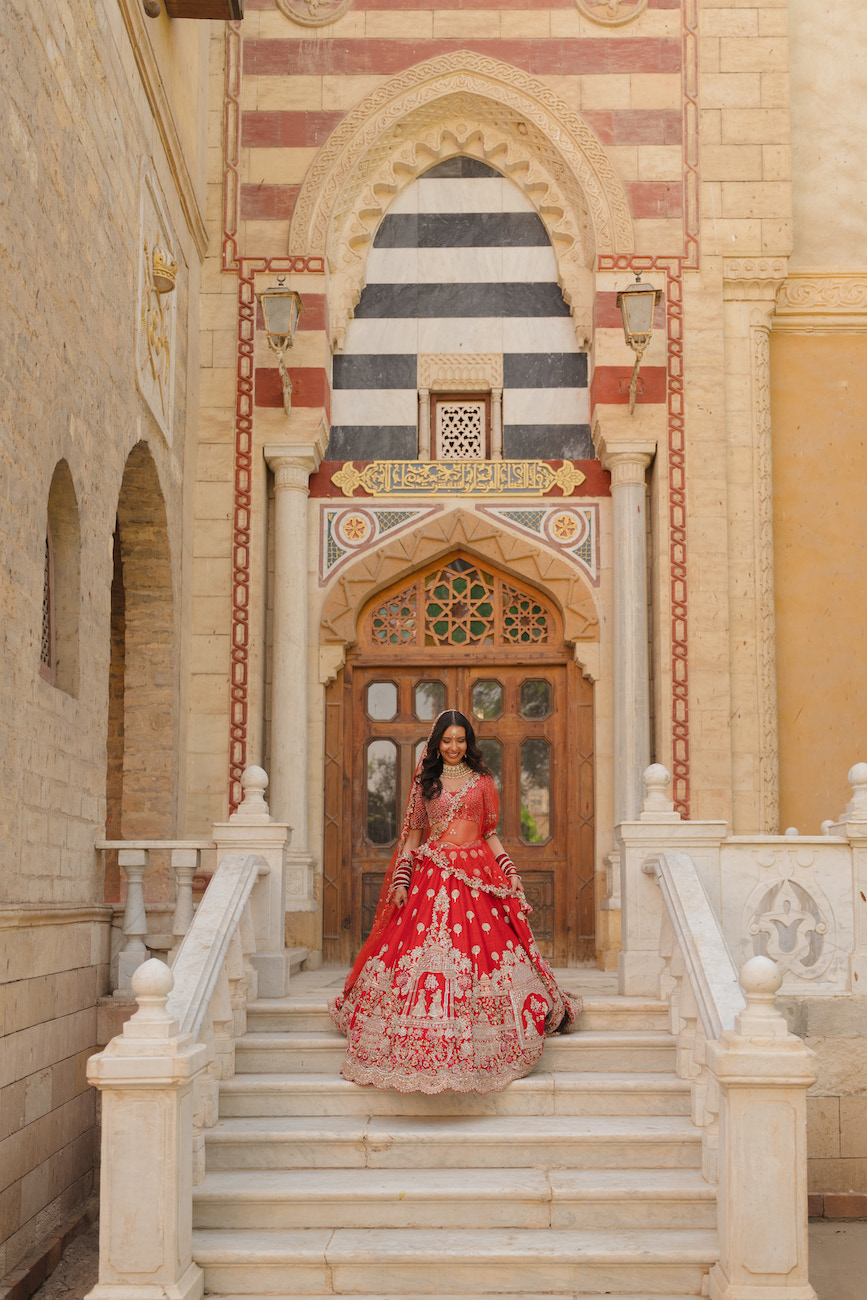
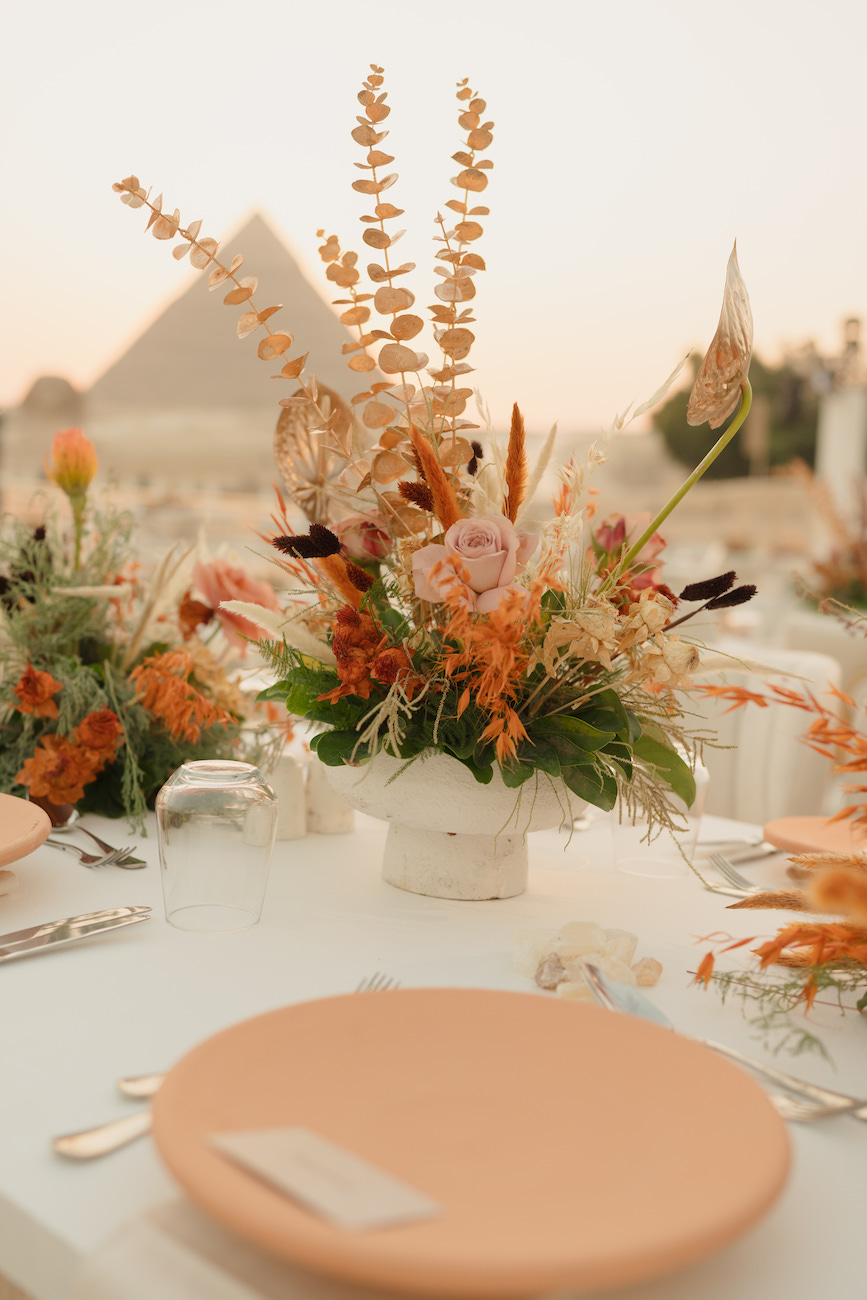
Some of those surprised us, certainly the veil restriction. But once you understand the logic, that you are standing on one of the last surviving Wonders of the Ancient World, every rule makes complete sense. Our approach was never to fight the restrictions but to design around them creatively. We replaced traditional candlelight with bespoke lighting installations that actually worked more beautifully against the desert backdrop. We reimagined the dessert experience entirely. And Monica’s look was designed from the outset to be striking without a veil, which ended up being one of the best aesthetic decisions of the entire celebration.
There were other restrictions that were less publicised, limitations on sound levels after certain hours, strict rules about what could and could not touch the monument surfaces, requirements about waste management and site restoration. Each one shaped our creative direction.
Strangely, the constraints made the wedding more beautiful, not less. They forced us to think differently about every single detail.
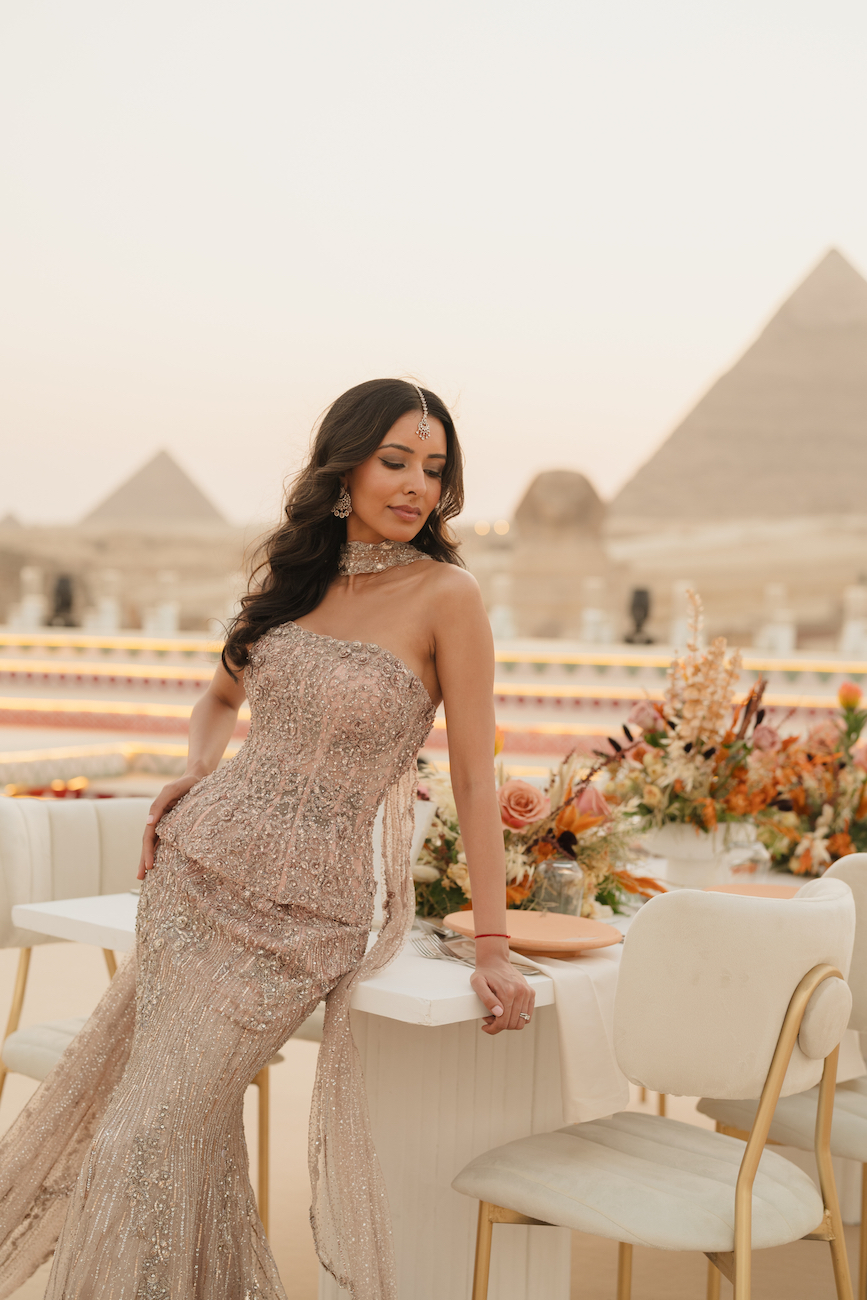
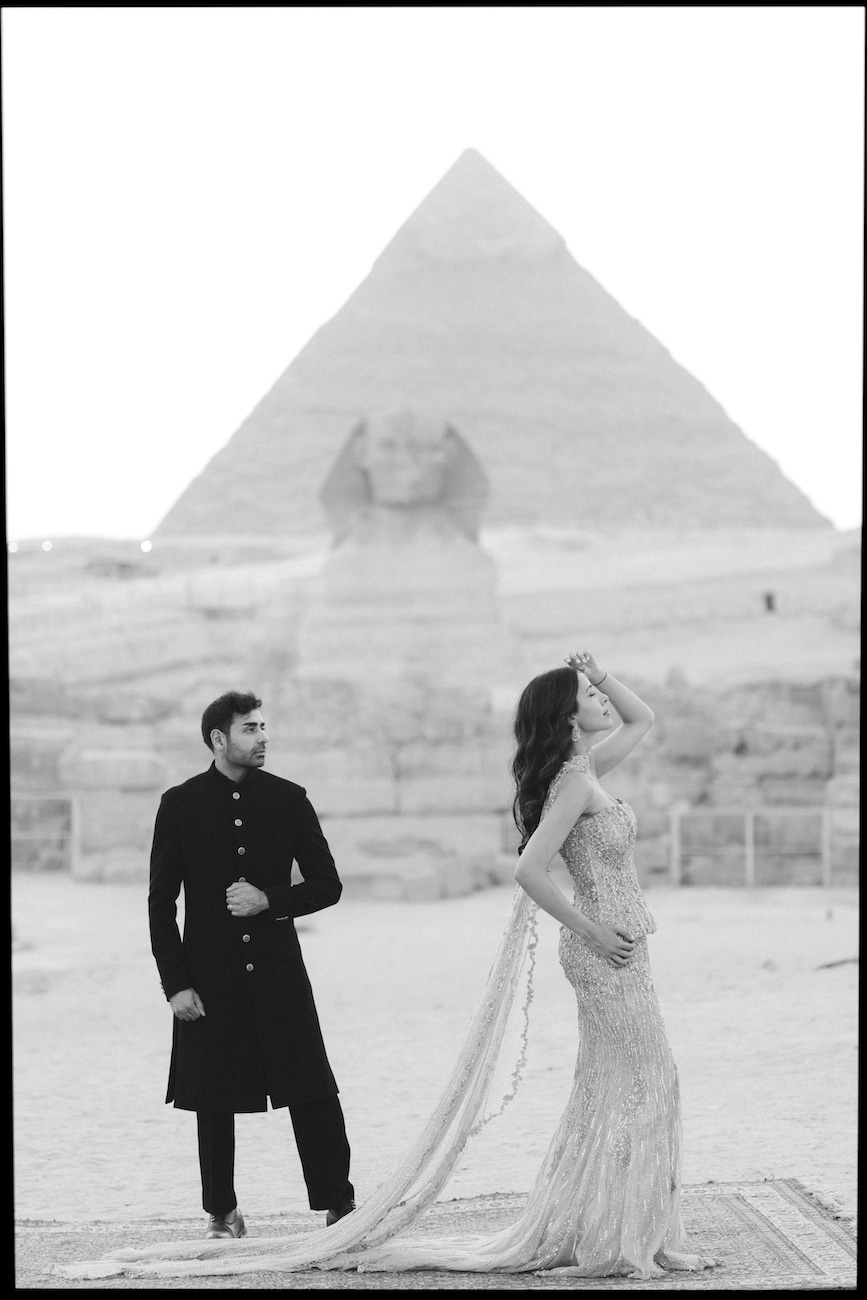
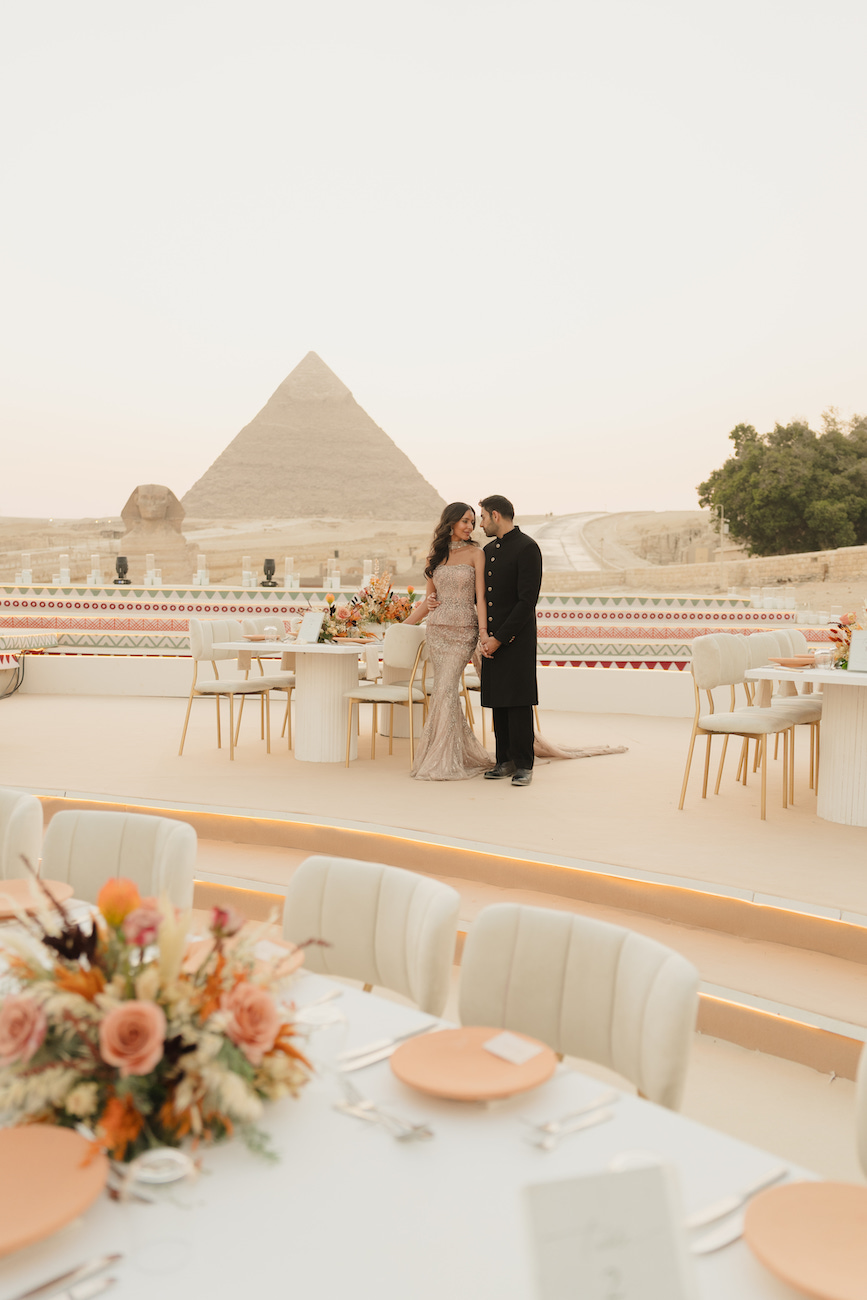
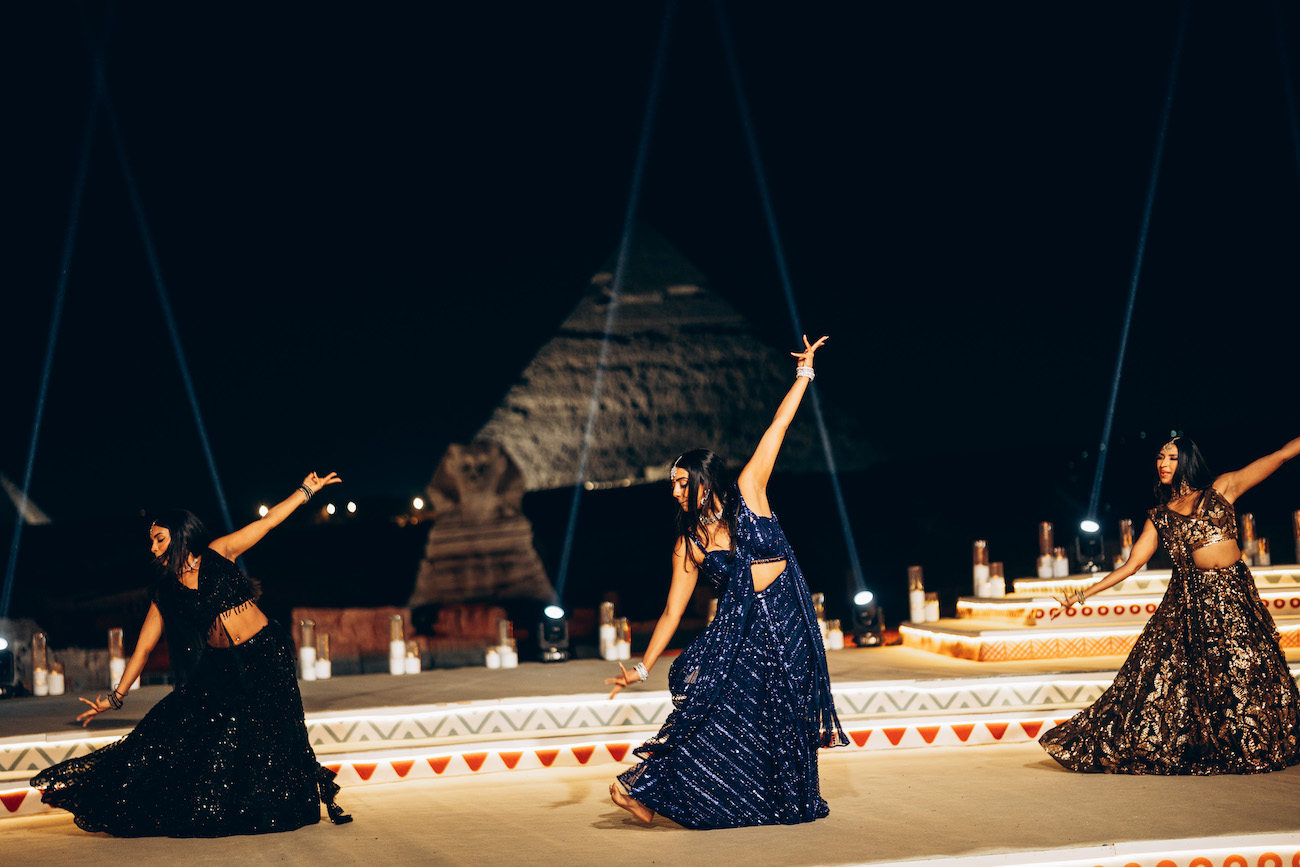
With special approval, the Pyramids and the Sphinx were illuminated solely for your celebration. How did you negotiate for that, and is it something other couples could realistically request?
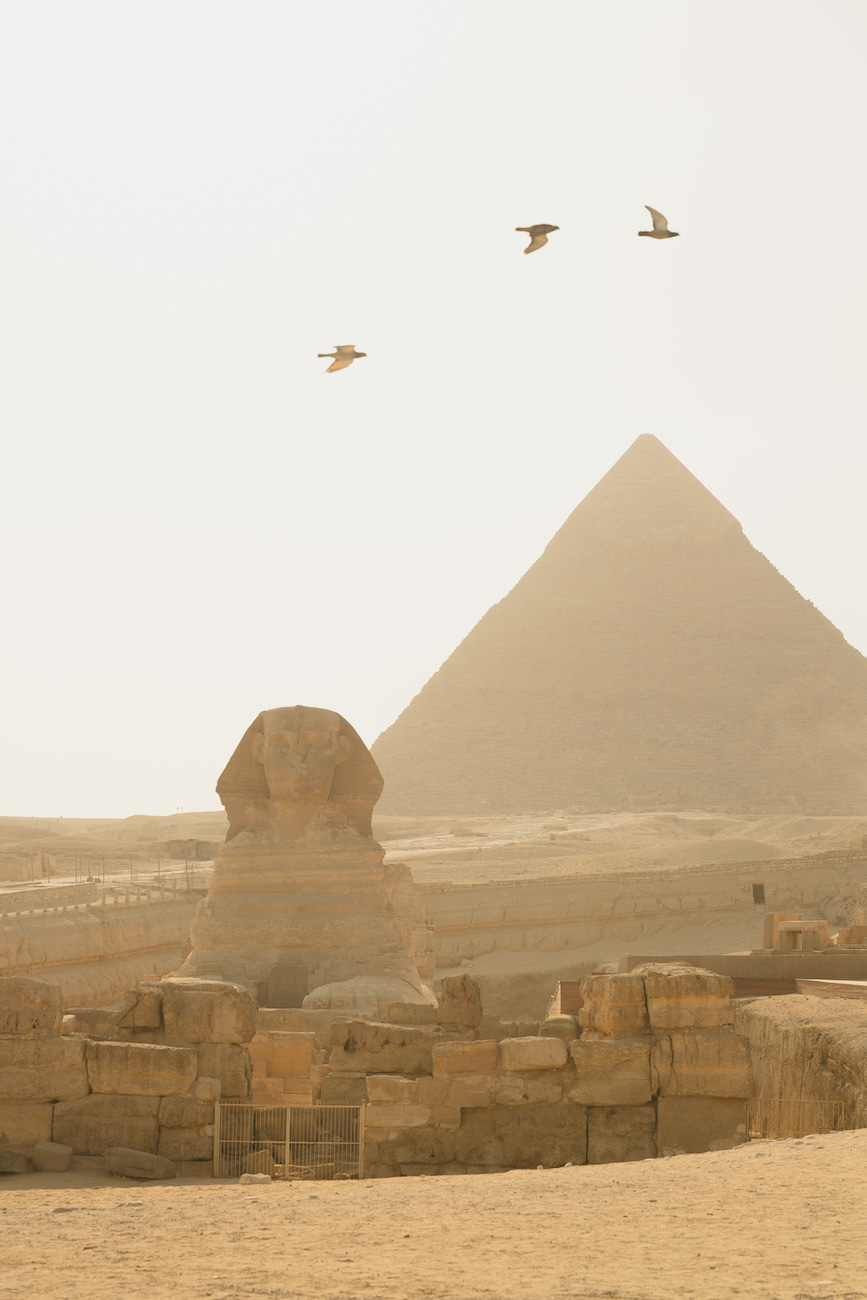
The illumination was the single most breathtaking element of the night. Seeing the Pyramids and the Sphinx lit up in that golden light, knowing it was solely for our celebration and our 180 guests, it is genuinely indescribable. I still get emotional thinking about it.
It was not a simple request. It formed part of the broader negotiations with the Ministry and required its own layer of special approval. The lighting infrastructure at the plateau is managed by the government, and activating it for a private event is exceptional. I think our case was helped by the fact that, by that point, the authorities had a high degree of confidence in our team and our intentions. Trust had been built over eighteen months of transparent collaboration, and the relationships I had developed during my time working in Egypt with the IMF gave us a level of credibility that would have been very difficult to establish from scratch.
Could other couples request it? In theory, anything is possible if the Ministry grants permission. In practice, I think you would need the same combination of factors: a credible proposal, genuine respect for the site, a willingness to meet every condition the government sets, professional relationships on the ground in Egypt, and, frankly, a significant investment of time and resources. I would never say it is impossible, but I would say it requires extraordinary commitment.
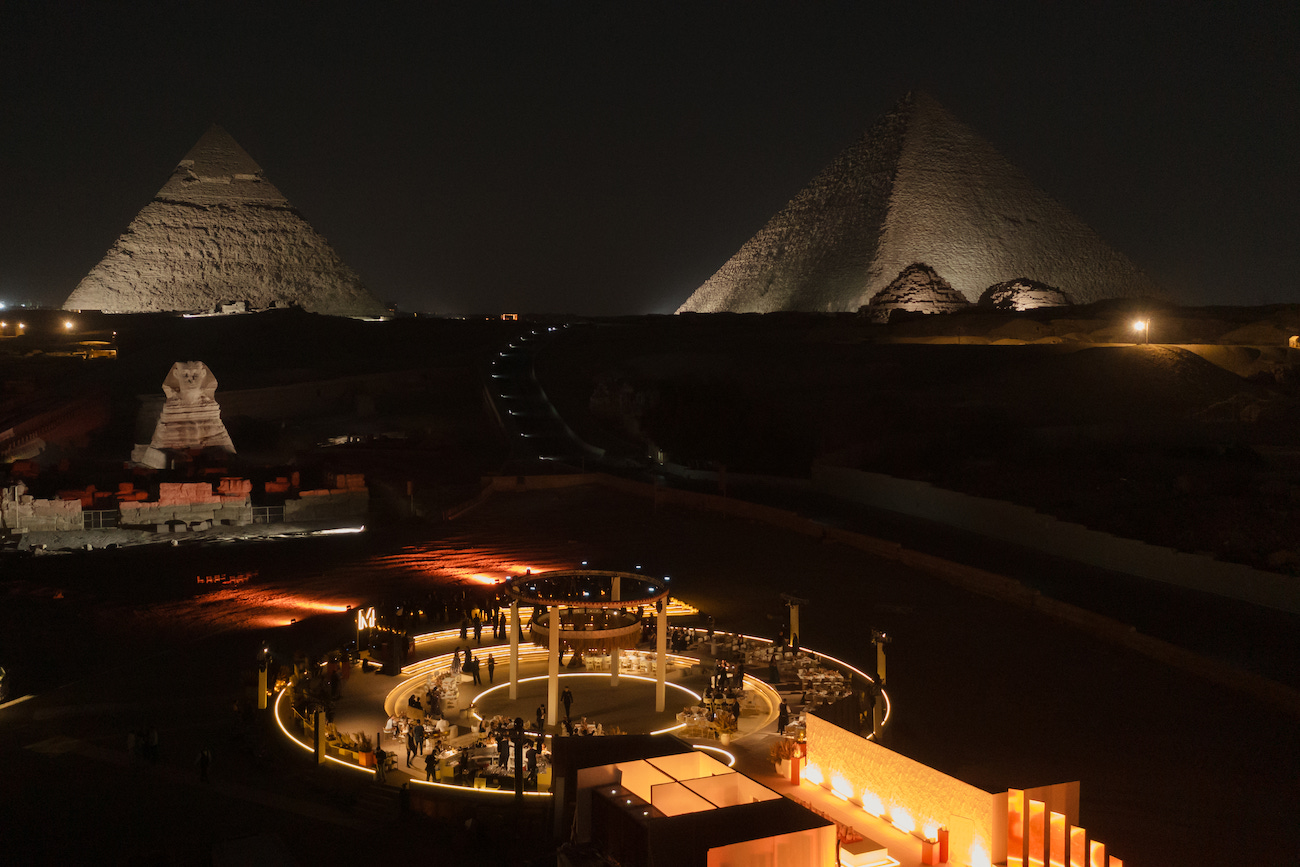
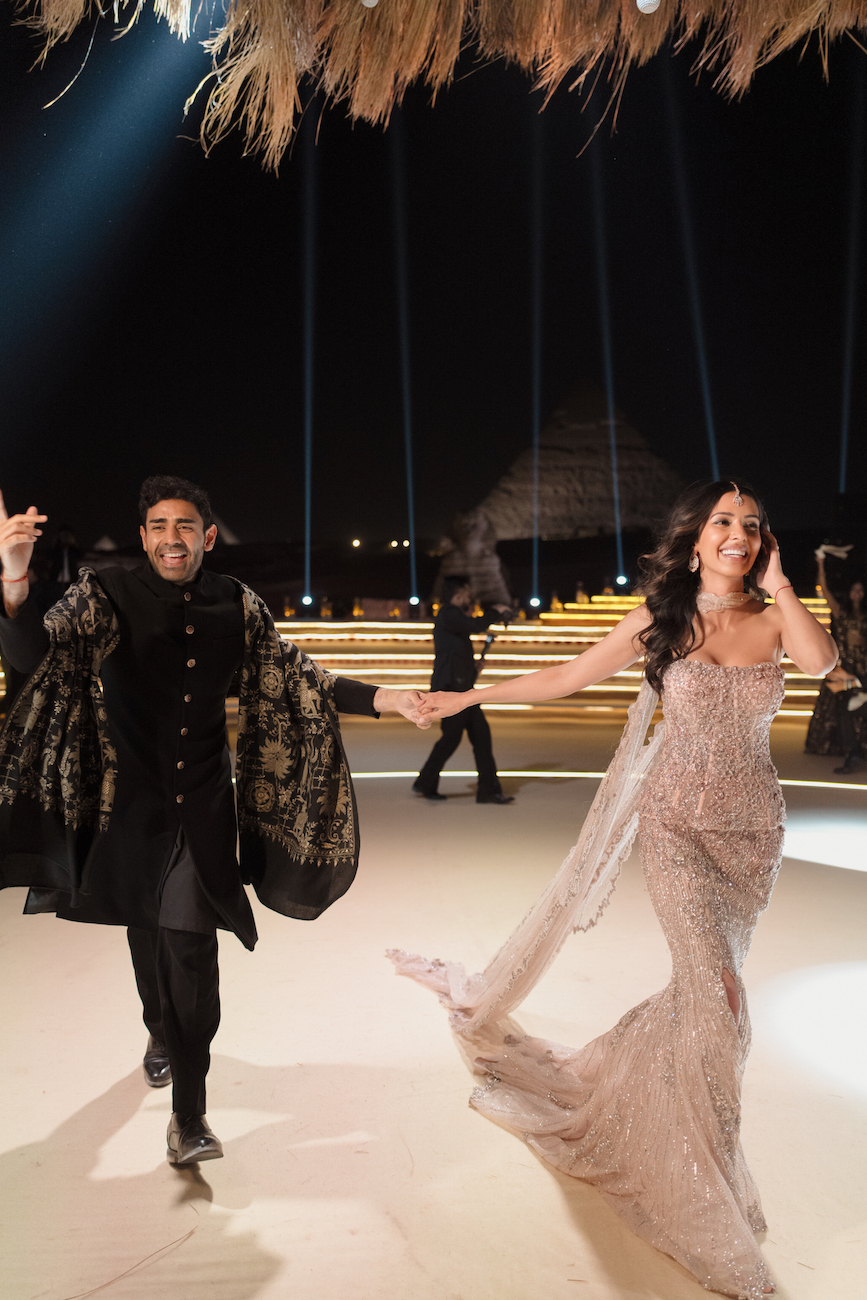
What time of year is best for a Giza wedding, and why did you choose early September?
Egypt is hot. That is the unavoidable reality of planning any outdoor event there. The peak summer months of June through August can see temperatures well above 40°C, which would make an evening event on the open plateau very uncomfortable for guests, particularly those travelling from cooler climates.
We chose early September because it sits at the transitional point between summer and autumn. The daytime heat is still significant, but by evening, when our reception took place, the temperature drops to something much more pleasant.
The desert air at night has a quality to it that is genuinely magical, warm but not oppressive, with a clarity you do not experience in a city. September also avoids the higher tourist density of the October to December peak season, which helped with the logistical side of securing the plateau.
Knowing everything you know now, what is the one thing you wish someone had told you before you started?
The emotional weight of it will hit you much later than you expect. When you are deep in the logistics, the approvals, the construction schedules, the endless coordination across time zones and languages, it can feel more like managing a complex international project than planning your own wedding. There were weeks where Monica and I were so consumed by problem-solving that the romance of what we were actually doing felt distant.
I wish someone had told me to build in moments of stillness during the planning itself. To step back and absorb the fact that we were doing something only two other couples in human history had done. We were so focused on making it happen that we almost forgot to feel it happening. The good news is that on the night itself, standing beneath those ancient stones, every ounce of that feeling came rushing in at once. But I would have liked to savour the journey a little more along the way.
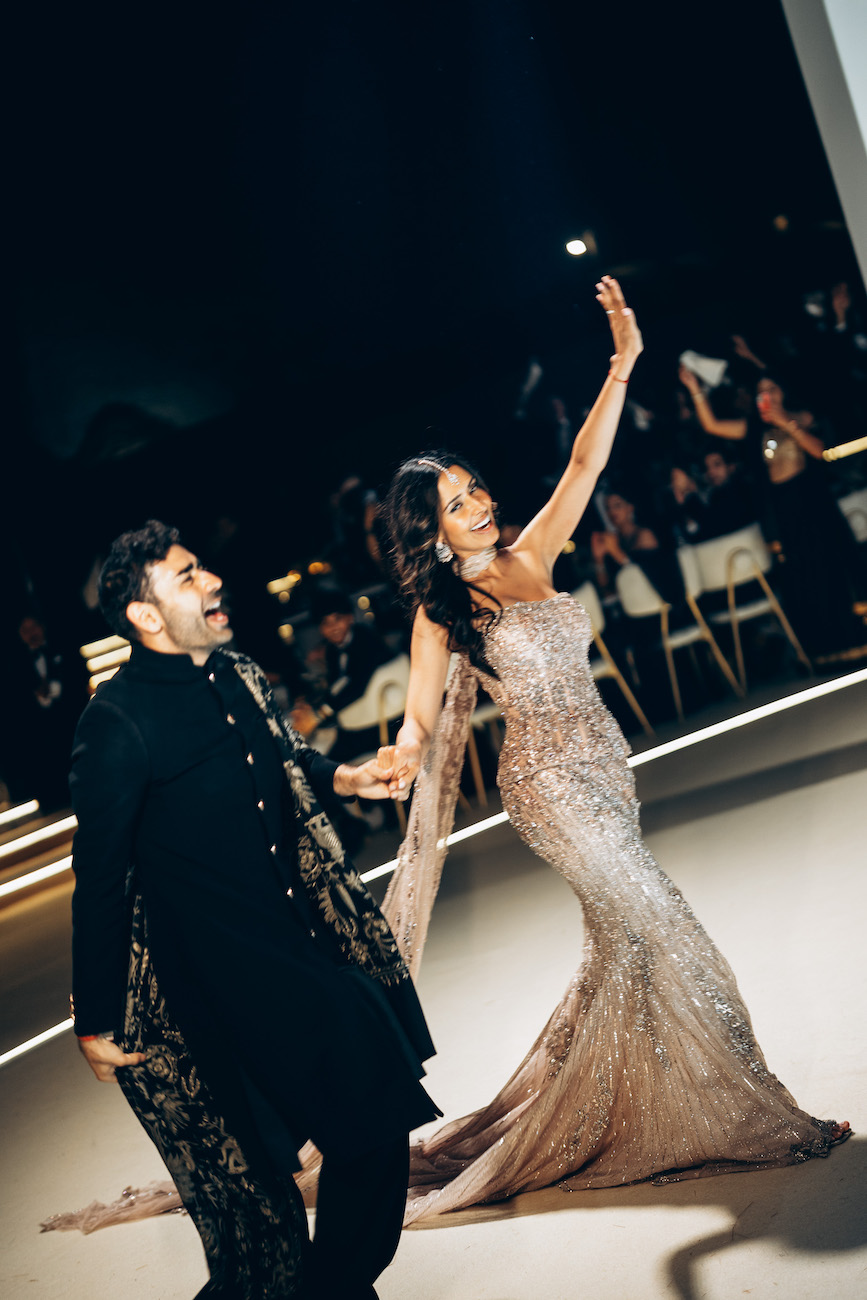
What moment made you feel the whole effort was completely worth it?
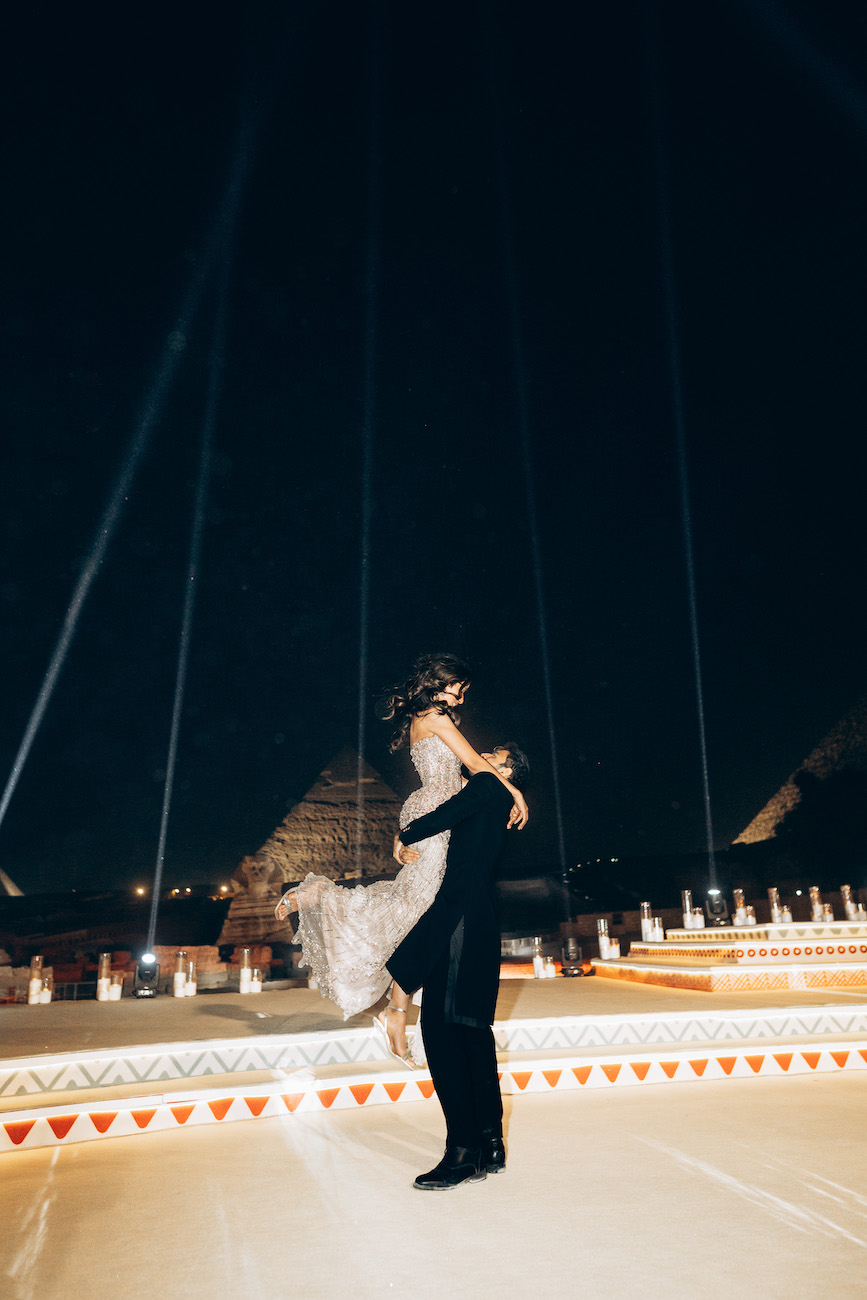
There was a moment just before the reception began. The Pyramids had been closed to the public for the day. The construction was complete. The Pyramids and the Sphinx had just been illuminated. And there was absolute silence. Monica and I stood there together, alone on the Giza Plateau, looking up at these monuments that have witnessed five thousand years of human history. In that stillness, none of the logistics mattered. None of the stress, the sleepless nights, the months of negotiation. It was just the two of us and the Pyramids.
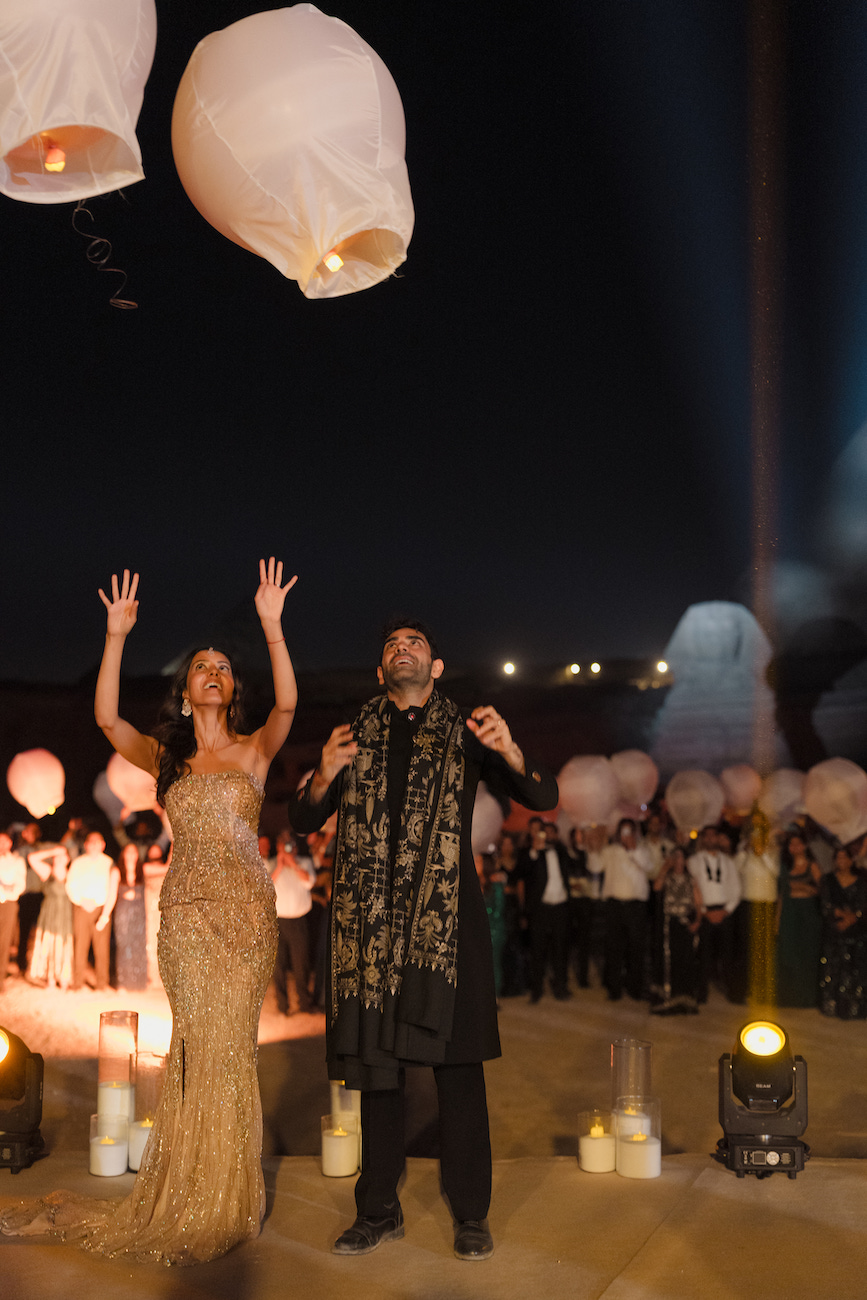
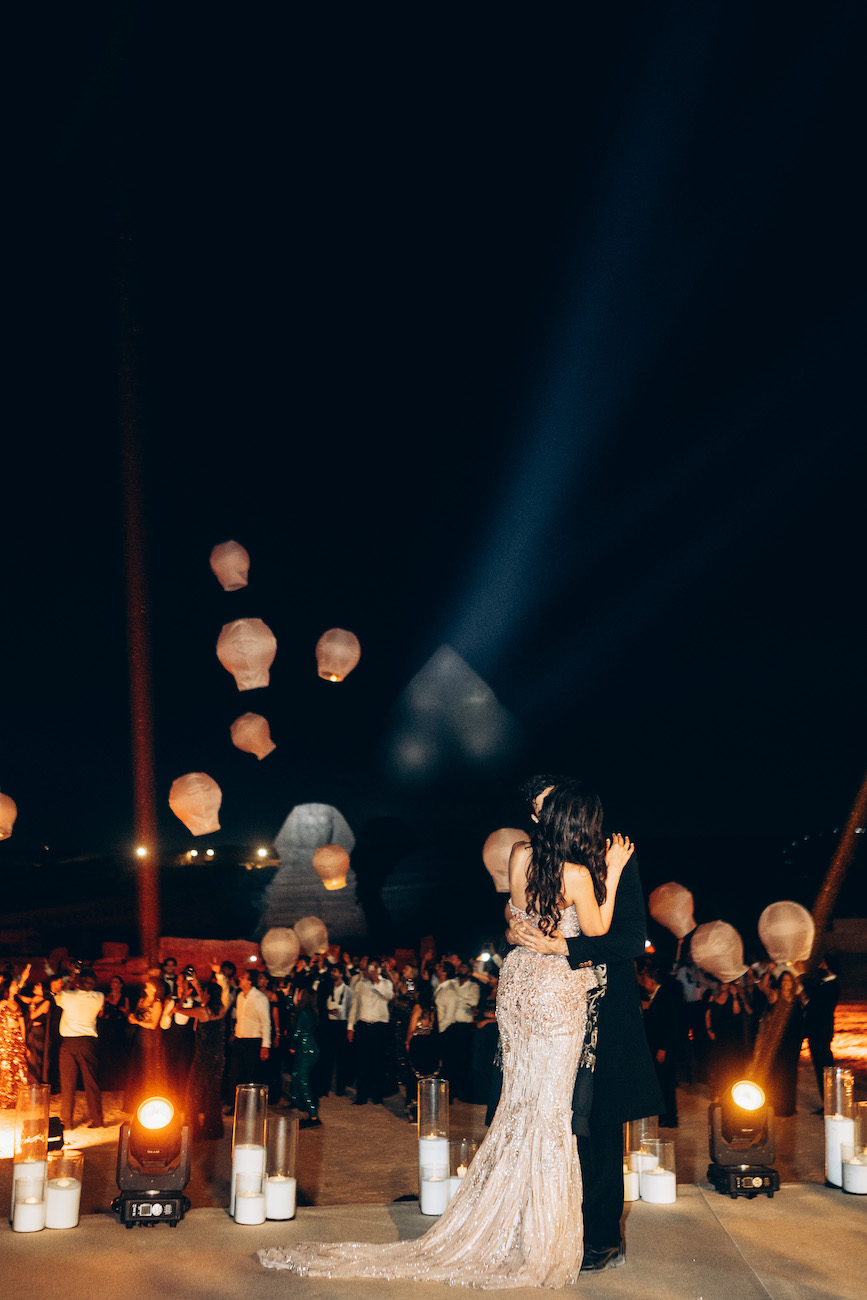
And then later, when our guests released paper lanterns into the desert sky as ‘What a Wonderful World’ played, and I looked around at 180 people we love standing beneath the greatest architectural achievement in human history. That was the moment. Not a single person was looking at their phone. Everyone was looking up. That told me everything.
@destinationidoHow in the world does a couple pull off a destination wedding with the Great Pyramids of Giza as their backdrop? The answer – insider knowledge and relations and a LOT of perseverance. When we were presented with the chance to interview the beautiful couple, Vivek Nandha, an investment banker, and Dr Monica Nayyar, a cosmetic dentist, about their Cairo celebration, we jumped at the chance. Go check out their one in a million wedding story on destinationido.com! 🎥 House On The Clouds 📷 Naman Verma♬ original sound Destination I Do